
Before I started freelancing, I had no idea how people actually got clients online.
I assumed “word of mouth” would eventually work, but it never felt like a real plan.

When you’re building a business, you need more than vague ideas.
You need a clear place to show up, a way for clients to find you, and a strategy that gives you consistent visibility.
LinkedIn is one of the strongest places to do that.
The platform brings together founders, marketers, editors, and decision-makers — the exact people who hire freelancers.
When you use it strategically, LinkedIn becomes a predictable source of clients.
Here’s how to make that happen.
1. Optimize Your LinkedIn Profile
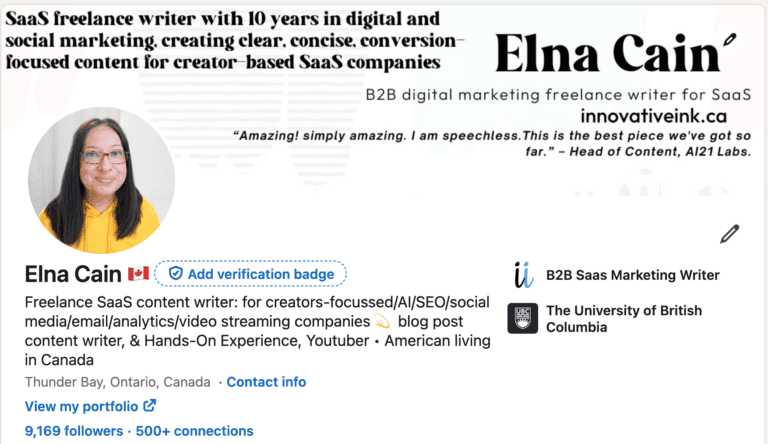
Your LinkedIn profile works like a landing page.
It tells clients who you help, what you offer, and why you’re qualified.
When it’s optimized, clients can find you based on the services you provide.
Why This Matters
A clear, keyword-focused profile helps you show up in search results when clients look for writers, creators, or freelancers in your niche.
Most hiring managers and founders type specific phrases into LinkedIn when they’re searching for talent.
If your profile doesn’t use the language they’re searching for, you won’t appear in those results — even if you’re the perfect fit.
An optimized profile also helps clients understand your value within seconds.
People on LinkedIn skim fast. They don’t read every section.
They glance at your headline, your About summary, and your opening sentences.
When those areas communicate who you help, what you do, and the type of results you create, clients feel confident reaching out.
It shortens the decision process and reduces friction because they immediately see how you fit into their business needs.
A strong profile works in the background at all times.
When it’s optimized, it attracts the right viewers, filters out the wrong ones, and turns passive profile views into warm leads.
How to Figure Out What Keywords to Use
Keywords are simply the words clients type into LinkedIn when they’re trying to find someone like you. To find them:
- Look at job descriptions for the type of work you offer.
- Check profiles of freelancers in your niche.
- Pay attention to the terms clients use when they message you.
- Think about your core services (e.g., “freelance writer,” “SaaS writer,” “email copywriter,” “content strategist”).
Choose a small set of keywords that reflect your services and industry.
Where to Use These Keywords
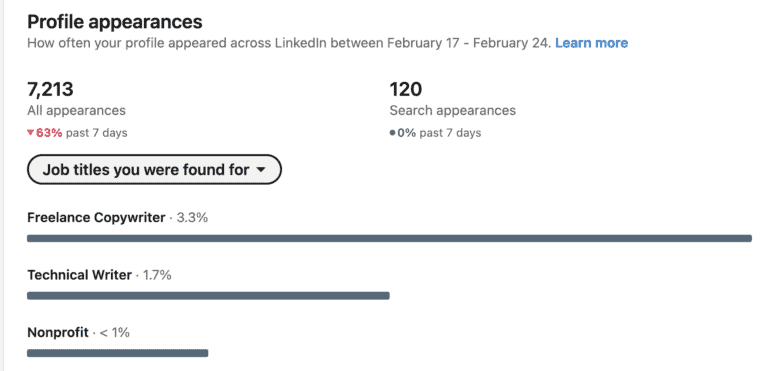
Place your keywords in the areas of your profile that matter most.
Your headline, About section, Experience section, and Skills list are the sections LinkedIn relies on to understand your services and niche.
When you include the right terms in these spots, the platform can accurately categorize your profile and match it with people who are actively searching for those services.
This makes your profile easier to find, increases your search visibility, and helps potential clients understand your expertise right away.
Even small keyword adjustments in these high-impact areas can lead to more relevant views and better-quality leads.
2. Post New Content
Content is how clients see your expertise.
It’s how they understand the way you think, solve problems, and communicate.
You don’t need to post every day, but you do need consistency.
Why Posting Helps You Get Clients
Your posts help you reach people who would never find your profile on their own.
When someone engages with your content, their network sees it too.
Over time, this creates a steady flow of visibility.
Clients want to work with freelancers who understand their industry. Your posts prove that.
What Works
Posts that perform well on LinkedIn usually have these qualities:
- Clear, simple writing
- A specific topic (not broad general statements)
- Practical insights or experiences from your niche
- A hook that gets attention quickly
- A single takeaway or message
- Content that helps the reader, not just promotes your services
Freelancers who post consistently tend to attract more profile views, more connection requests, and more inquiries.
Topics that work especially well:
- Lessons from client projects
- Industry insights
- Writing workflows
- Mistakes clients should avoid
- Results you helped create
- Behind-the-scenes looks at your process
- Advice for people new to your niche
What Doesn’t Work
Some posts blend into the feed and never gain traction because they don’t give the reader anything useful to hold on to.
Overly promotional content usually falls flat because it feels like an ad, not a conversation.
Posts built on clichés or vague advice get ignored because they don’t offer anything specific or helpful.
Long rants without a clear takeaway lose readers quickly, and jargon-heavy writing creates confusion instead of clarity.
Even inconsistent posting can make it harder for your audience to connect with you because they don’t see you often enough to remember what you do.
LinkedIn rewards clarity and consistency.
When your posts are simple to read, easy to understand, and focused on something helpful or interesting, people respond.
They comment more, share more, and check out your profile because they can see the value you bring.
3. Engage With Others

Engagement is the fastest way to build visibility without posting daily.
It shows your expertise in front of new audiences and helps you build relationships with people who might hire you.
Why Engagement Matters
When you comment on someone’s post, your name shows up in their network.
If your comment is helpful, people check your profile.
If your profile is optimized, they understand what you offer. This creates a simple path from comment → profile view → connection → inquiry.
It’s one of the most reliable ways to get clients on LinkedIn.
What Works
Effective engagement happens when your comments actually contribute to the conversation.
This can mean adding a bit of insight that moves the discussion forward or clarifying a point the original poster made.
It can also be as simple as sharing a short example or your own perspective to show that you understand the topic.
Engaging well also includes responding to people who comment on your posts and interacting with content shared by founders, editors, and marketing leads — the people who often hire freelancers.
Asking thoughtful follow-up questions is another strong way to show you’re paying attention and genuinely interested in the discussion.
High-quality comments build trust quickly.
They show you communicate clearly, think critically, and understand your niche.
People notice freelancers who show up this way, and they’re more likely to check out your profile or reach out when they need help.
What Doesn’t Work
Certain engagement patterns feel forced or unhelpful, and they usually do more harm than good.
One-word or generic comments don’t add anything to the conversation, so they get ignored. Dropping links everywhere comes across as pushy, especially when no one asked for them.
Commenting without actually reading the post is easy to spot, and it signals that you’re engaging only to be seen, not to contribute.
Some freelancers comment only when they want attention, and that becomes obvious over time.
And the quickest way to lose trust is by pitching someone immediately after leaving a single comment.
Clients can spot low-effort engagement. It doesn’t build connection, authority, or credibility.
Focus on being helpful and consistent instead.
Thoughtful engagement is what people remember, and it’s the kind that leads to real opportunities.
Conclusion
Landing freelance clients on LinkedIn doesn’t require daily posting or complicated tactics. It comes down to three core habits:
- Optimize your profile so clients can find you.
- Post valuable content that shows your expertise.
- Engage thoughtfully with people in your niche.
These steps work together. Your profile brings clarity. Your content builds authority. Your engagement builds relationships. When you keep these three in motion, LinkedIn becomes one of the most predictable and professional places to attract new freelancing clients.



Leave a Reply